

.png)

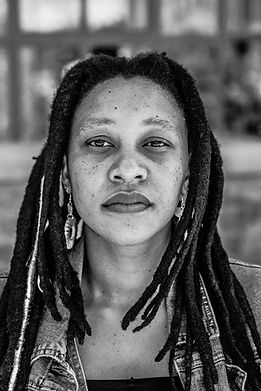
Tsholofelo
Shounyane
Biography
Tsholofelo Shounyane (Co-Author)
Tsholofelo Shounyane is a facilitator, dollmaker, storyteller and published author. She holds a BA Drama (UP, 2010), PGCE (CUT, 2015) and Copywriting Certificate (UCT, 2015), and has worked with various institutions and organisations including the University of Pretoria, Arepp: Theatre for Life, Artscape Theatre, Windybrow Arts Theatre, Play Africa, the Hillbrow Theatre Project and winner of VANSA’s Cultural Leadership Programme pitch with Dollmaking for Change (2022)..
She is passionate about theatre for development, theatre in education and teaching through the arts. She currently works as the Monitoring, Evaluation & Learning and Education Coordinator at ASSITEJ South Africa and Naledi Theatre Awards Judge (Children's Panel, 2017 - current). Her work at ASSITEJ SA involves the Girl Power Project (Nelson Mandela Children's Fund), Arts-Rich Schools (Department of Basic Education), One Person One Note (Goethe-Institute), IDC's Social Employment Fund, Cradle of Creativity International Children's Theatre Festival and Nompilo, a play developed by ASSITEJ as an practice-based artivist intervention that advances gender justice through an intersectional, child centered approach.
Yvette Hardie (Author)
Yvette Hardie is a theatre director, producer, educator, and arts advocate. She serves as the national director of ASSITEJ SA and held the presidency of ASSITEJ from 2011 to 2021, leading an organization spanning over 100 countries. She was responsible for hosting the 19th ASSITEJ World Congress in Africa for the first time, which launched the Cradle of Creativity Festival, now a biennial event. Her expertise in arts education is underscored by her authorship of national curricula and textbooks for Dramatic/Creative Arts, along with extensive teaching at secondary and tertiary levels. Formerly Head of Drama at the National School of the Arts, she is a prolific writer and speaker on arts for young audiences, arts education, and arts for reconciliation, honoured with the Mickey Miner Award from IPAY for her global impact on theatre for young audiences. Yvette is also the Chairperson of the STAND Foundation, dedicated to sustaining theatre and dance.
Nompilo: Navigating the Justice System for Children
This paper examines the theatre production Nompilo as a practice-based artivist intervention that advances gender justice through an intersectional, child centred approach. Developed by ASSITEJ South Africa, Nompilo is a play with integrated workshops created for Grade 5 and 6 learners, responding to the urgent realities of gender based violence experienced by children in South Africa Positioned within the Global South context, the work demonstrates how theatre can function as both creative practice and social action, engaging young audiences in processes of healing, knowledge building and collective responsibility. The presentation explores how Nompilo contributes to gender justice by making visible the systems that surround gender based violence, including education, social services, healthcare and the justice system, while carefully centring the lived experience of a child. Rather than focusing on spectacle or trauma, the work foregrounds care, agency and resilience. It challenges gender stereotypes and power imbalances through age appropriate storytelling that recognises how gender, age, class and access to services intersect in shaping children’s experiences of harm and recovery. Drawing on extensive consultation with educators, child psychologists, legal practitioners and social workers, Nompilo exemplifies an intersectional artivist methodology in which artistic creation is underpinned by ethical responsibility and community accountability. The accompanying workshops extend the performance into a participatory space, enabling dialogue, emotional processing and practical knowledge sharing. This positions artivism not as a fixed cultural product but as an ongoing process of engagement and learning. The presentation argues for theatre for young audiences as a critical site of artivism. It offers reflections on how creative work with children can contribute meaningfully to reimagining futures grounded in gender justice, care and collective transformation in South Africa and beyond.