

.png)

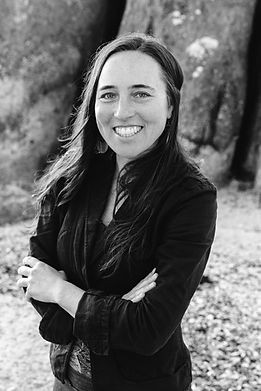
Sarah van Borek
Biography
Dr. Sarah Van Borek is a Postdoctoral Research Fellow attached to the SARChI Chair in decolonisation and teacher education in the Faculty of Education at the University of the Western Cape. Sarah is a filmmaker, educator, and arts-based researcher specialising in community and youth-engaged research methodologies, creative learning approaches and knowledge translation, water justice, and health equity. Her PhD in Education (specialisation in Environmental Education) from Rhodes University explored film-based water curriculum towards reconciliation and decolonisation in higher education. Her MFA in Film and Television from UCT explored gender issues through a youth-engaged pilot music television show. She has developed innovative participatory audiovisual methods across Africa, including song and music video-making with women in Congo, digital storytelling and AR-making with youth in Kenya, and documentary filmmaking with activists in South Africa. While Canadian-born, she has lived and worked in sub-Saharan Africa for over 20 years and taught for nine years at Canada’s top higher education art and design institution, the Emily Carr University of Art + Design. For more information: www.sarahvanborek.co.za
Interactive AI filmmaking in African languages as radical pedagogy for water and gender justice
Artivism theme: Gender justice and intersectional approaches in artivism
How can nonlinear storytelling in African languages, through participatory interactive AI filmmaking, help advance water and gender justice for girls in Africa? How can interactive film screenings with linguistically diverse audiences, combined with dialogues and arts-based activities, foster social and environmental change at policy and community levels? These are the core questions this paper seeks to address. In 2026, an interactive AI-assisted film in isiXhosa (with English subtitles) titled The Power Beneath Our Feet was co-created by a Cape Town NPO, Black Girls Rising (BGR) and a Postdoctoral Research Fellow specialising in community-engaged arts-based research methods. This innovative methodology empowered underrepresented girls (aged 9-18 years) living in Khayelitsha, South Africa, to share stories about their journeys collecting water, including the risks they face and how they navigate these risks. Through a “choose-your-own-path” film, blending actual footage filmed by girls and AI-assisted footage scripted by girls, the film immerses audiences in girls’ lived experiences while creating safe spaces for girl-led water solutions. The filmmaking was supported by isiXhosa community narrators and voice actors. The film was shared in a series of film screening, dialogue and arts-based workshops, including at South Africa’s National Arts Festival–led by girls from BGR and guided by a co-created Film Discussion Guide for educators–to leverage the impact of the film. This paper reflects critically on the film as an act of ‘language’ and its potential contribution to experiences of hope and empowerment. Through documenting and evaluating dialogues and arts-based outputs, including youth-generated policy recommendations, this paper provides evidence that this approach can be harnessed as radical pedagogy for water and gender justice, and may be useful to advancing other forms of social and environmental justice within and beyond South Africa.