


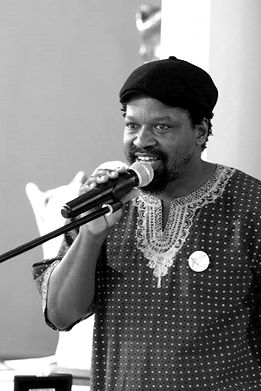
Bongani
Mkhonza
Biography
Bongani Mkhonza is a Senior Lecturer in Art History and a former Curator of the Art Gallery and Collection, under the University of South Africa (UNISA). His research interests are the repatriation of looted African art and decolonising the university art collections. Moreover, Mkhonza is engaged with academic projects that foster the restoration of art and cultures of the former colonised subjects, especially from the Global South. During his tenure as an Art Curator, he has curated more than twenty art exhibitions nationally and some internationally. He has a PhD in Art and Philosophy. His PhD research is theoretically grounded in Afrocentricity, African art/postcolonial/decolonial studies. Mkhonza also has a working understanding of policies that govern the museums and university art collections. He is also currently teaching and supervising students at the Honours, Master's and PhD levels. He is a member of different associations, including the South African Visual Arts Historians (SAVAH) and the Arts Council of the African Studies Association (ACASA). Furthermore, some of his recent publications include Relocating the Centre: Decolonising University Art Collections in South Africa. Published by ONCURATING (2021), Towards Epistemic Repatriation: Re/membering as the Moral Responsibility of Museums, by South African Museums Association Bulletin (SAMAB, 2022), Interrogating the pitfalls of repatriation of African art: A case for institutions of repatriation in South Africa, by SAMAB, 2023), What Asante Said: A Philosophical Engagement with Asante and His Theory of Social Change, (Universal Write Publications, 2025), and more.
Decolonising Art Posters and Activism
Activism has long been a catalyst for reimagining futures, particularly in contexts where systemic oppression demanded creative disruption. Using a decolonial lens, this research papers critical reflects on the exhibition ‘A Reflection on South Africa: Struggles to Come to Grips with Its Young Democracy’, hosted by the Unisa Art Gallery in May 2017, offering a critical lens into this transformative process. Showcasing political and election posters from 1994 onwards, the exhibition highlighted the role of visual activism in mobilising resistance against apartheid and in shaping democratic discourse. Produced under harsh conditions, these posters exemplify how artists and activists employed printmaking to communicate political messages, challenge injustice, and envision a more humane society. The exhibition, opened by Judy Seidman—renowned printmaker and chronicler of the South African poster movement—underscored the intersection of art, activism, and collective memory. By organising posters into thematic and temporal sequences, the gallery invited viewers to trace the evolution of slogans, imagery, and political representation, from mass mobilisation to individualised portrayals of leaders. This progression reflects both the historical struggle for liberation and the ongoing question of Africa’s future: where are we going? Ultimately, the exhibition situates activism not merely as resistance but as a reimagining of futures—an effort to dismantle colonial legacies and construct new worlds. The posters serve as both historical artefacts and living reminders of the unfinished project of decolonisation, urging contemporary audiences to continue the demanding work of building a better Africa and a better world.